Cooling Systems
Tracing Chronic Coolant Leaks: A Systematic Approach to Elusive Seepage Points
Slow coolant loss frustrates owners and technicians alike. The reservoir drops over weeks without an obvious puddle, leading to repeated top-offs and overheating risk. Chronic seepage often escapes visual inspection because it evaporates on hot engine surfaces before reaching the ground.
Signs of a Chronic Leak
White crystalline residue around hose clamps, fittings, or water pump weep holes indicates historical seepage. Sweet odor in the cabin may point to heater core seepage into the HVAC box. Gradual loss of cabin heat during idle can correlate with low coolant level affecting the heater circuit.
Do not rely on stain color alone — oil contamination and road splash mimic coolant traces. Confirm with pressure testing before replacing major components.
Stage One: Pressure Testing
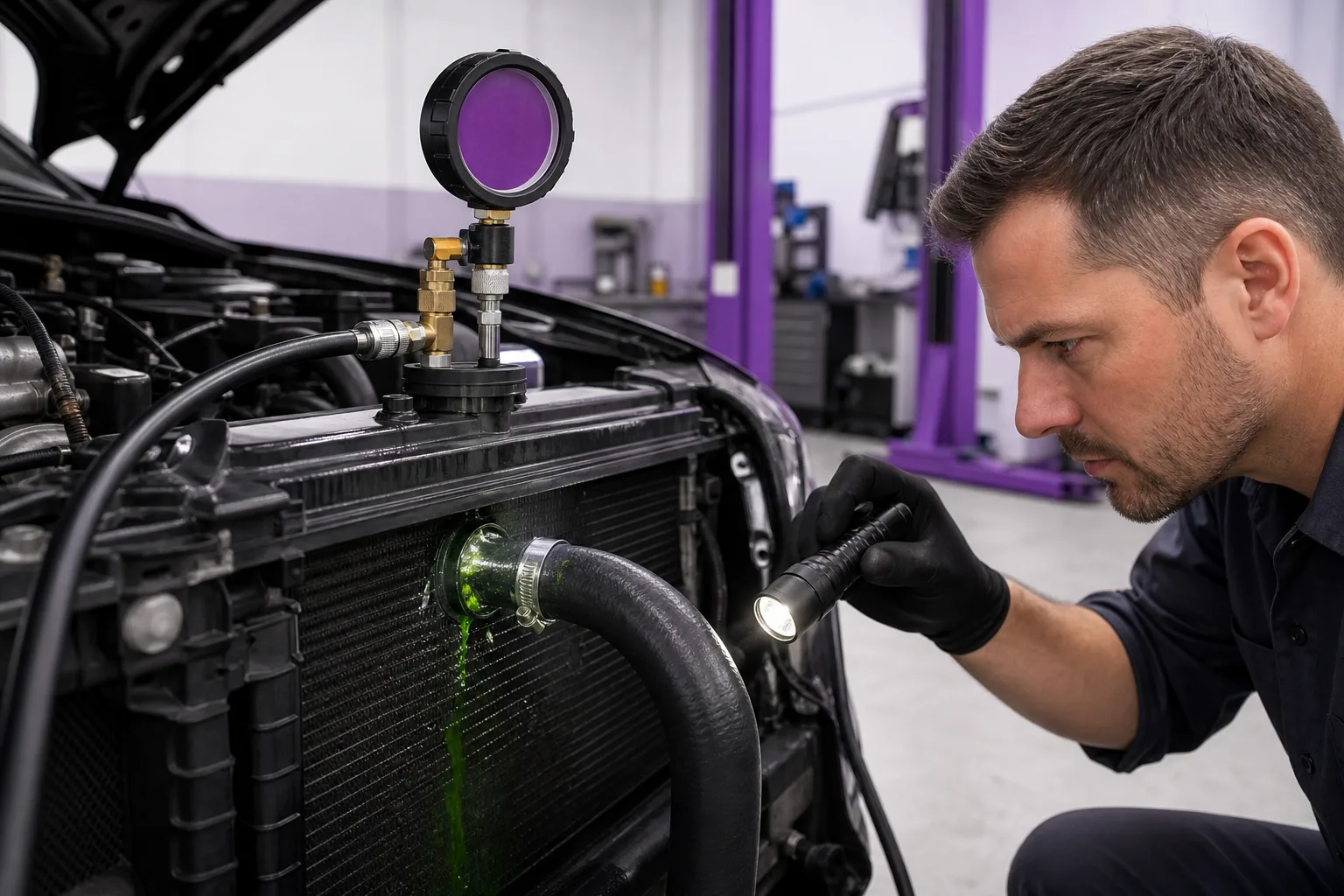
A calibrated pressure tester applied to a cold system reveals leaks that only open under operating pressure. Hold system pressure at the radiator cap rating and observe gauge drop over time. Inspect hose ends, thermostat housing, and radiator tank seams while pressure is applied.
Combining With UV Dye
When pressure testing shows drop without visible escape, add manufacturer-approved UV dye and run the engine to operating temperature. Re-inspect with a UV lamp after the system cools — dye traces highlight micro-seepage paths invisible under white light.
Stage Two: Thermal Imaging
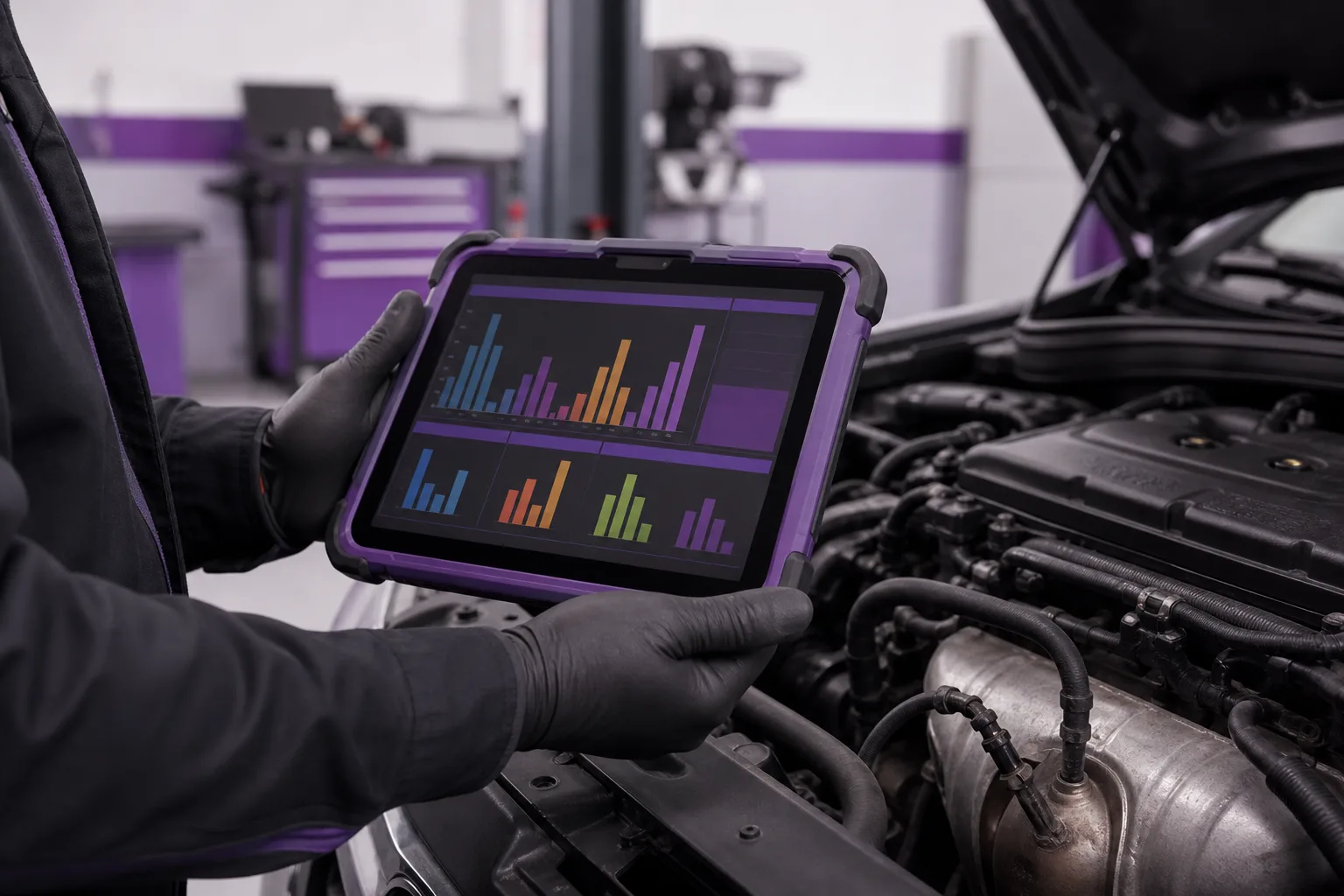
Thermal cameras reveal temperature anomalies along the cooling circuit. A partially blocked radiator channel or internal head gasket breach may show as uneven heat distribution. This step is especially useful when combustion gas enters the cooling system without external wetness.
Exhaust gas analyzers detecting hydrocarbons in the coolant overflow bottle provide additional confirmation for internal breaches before committing to major disassembly.
Repair Documentation and Warranty
Once the leak source is confirmed, repair scope should address root cause — not just the visible wet spot. A degraded hose near an overheating water pump indicates both components need attention. oligodendro documents pressure test results before and after repair, with written warranty coverage on the replaced parts and sealing surfaces.
After repair, the system is vacuum-filled where applicable to prevent air pockets that cause false overheating readings and repeat customer visits.